The Central European agri-food sector offers significant opportunities, yet borders still often represent obstacles for producers and businesses. Differences in regulations, certification requirements and administrative procedures, as well as language and logistical barriers, make it more difficult for products to reach new markets and for businesses to establish partnerships. Smaller enterprises also often have limited access to innovation and digital services.
The Central2Table project aims to reduce these barriers through practical joint solutions and strengthen cross-border innovation in the agri-food sector. The project is testing new cooperation models in three border regions: the Polish–Czech, Hungarian–Slovenian and Austrian–German border areas.
Local products, new markets and connected services
One of the project's key objectives is to bring local producers, food processors and tourism service providers together as partners rather than having them operate separately. The activities range from strengthening digital and business skills to supporting short supply chains and promoting local gastronomic heritage.
The project will contribute to the development of three cross-border innovation centres and provide targeted services to a total of 90 agri-food sector stakeholders. Digital knowledge-sharing and partner-search solutions will facilitate the flow of information, the establishment of business connections and the exchange of good practices. Particular attention will be paid to involving young people and women, as well as supporting generational renewal in the sector.
Pannon EGTC plays a key role in the Hungarian–Slovenian border region and across the entire project
In the Hungarian–Slovenian border region, Pannon EGTC is working to connect local producers with tourism service providers. Together with its Slovenian partner, it is developing agritourism solutions that integrate local products into tourism experiences.
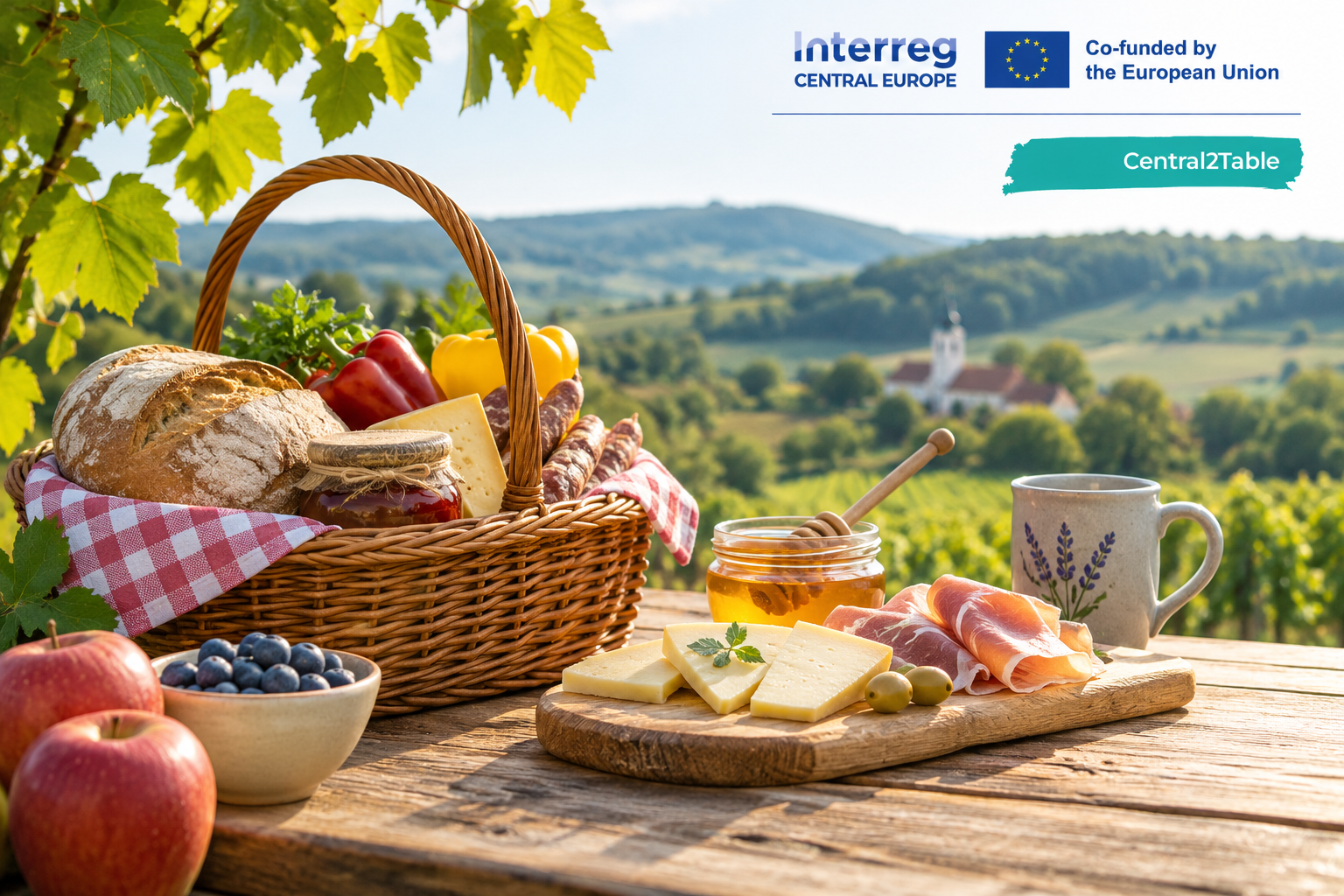
One practical example is the "Breakfast from the Region" concept: through cooperation between local producers and accommodation providers, breakfasts and breakfast baskets made from locally sourced products could become part of the tourism offer. The plans also include joint branding and communication workshops, as well as the development of agritourism packages that encourage cooperation between producers and service providers. At least 30 agri-food and agritourism small and medium-sized enterprises are expected to benefit from the Hungarian–Slovenian pilot.
However, Pannon EGTC's role extends beyond local development activities. As the lead partner of the project's third work package, it coordinates efforts across all three border regions to identify and address cross-border barriers and ensure the long-term use of project results. This includes developing policy recommendations, organising consultations with decision-makers and professional forums, and establishing a common operating model for cross-border information points. The aim is to ensure that the experience gained during the project does not disappear when the programme ends, but is transformed into solutions that can also be applied in other border regions.
Cooperation that creates lasting value beyond the project
Central2Table will run from October 2026 to September 2028, bringing together six partner organisations from five countries. The total project budget is EUR 1,075,191, of which 80% is co-financed by the European Regional Development Fund (ERDF) under the Interreg Central Europe Programme 2021–2027.
The aim is to turn borders from obstacles into opportunities for local producers and businesses. By connecting high-quality local products, tourism and innovation, the project seeks to create not only new business relationships but also sustainable regional partnerships that will continue to deliver value long after the project has ended.